


Blog / GMC Service near Patterson, CA

GMC Yukon vs. Yukon XL Cargo Space: Which Fits Your Family's Holiday Luggage?

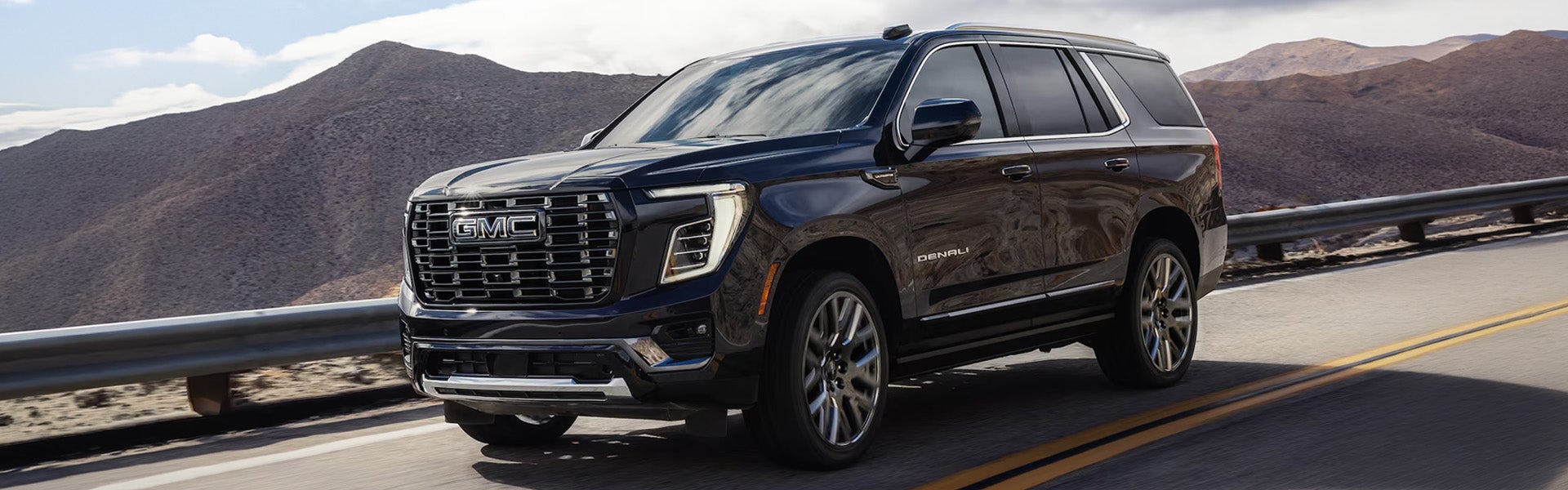
Black GMC Yukon Denali driving on a mountain road.
The holiday season brings a massive amount of luggage for traveling families. Suitcases, wrapped gifts, and bulky strollers can quickly push your SUV's cargo area to its absolute limit. If you are comparing the GMC Yukon and Yukon XL cargo space, you are asking the right question before hitting the road. Thompson Buick GMC, serving Patterson, CA, is here to help you decide which model perfectly fits your travel needs.

Two Full-Size SUVs, One Key Difference


The GMC Yukon and Yukon XL share the same platform, powertrains, and premium features. The XL adds a stretched wheelbase that significantly increases your hauling capacity. This extra length provides far more usable cargo volume behind the third row.

The standard Yukon offers 25.5 cubic feet of cargo space behind the third row. This volume easily fits several rolling suitcases. Folding the third row flat opens up 72.6 cubic feet. Folding both rear rows creates an expansive 122.9 cubic feet of total cargo room.

Where the Yukon XL Pulls Ahead


The stretched body of the Yukon XL gives it a massive cargo advantage. Behind the third row, you get 41.5 cubic feet of space. This extra room prevents you from needing to awkwardly strap bags to the roof.

Folding the third row provides 93.8 cubic feet. Dropping both rear rows reveals a cavernous 144.7 cubic feet of total volume. Families traveling with large groups or heavy sports equipment will find this extra room highly practical rather than just a number on a spec sheet.

Passenger Space and Practicality


Both models seat up to nine passengers depending on the configuration. You must decide if you need to carry a full passenger load and their gear simultaneously.

The standard Yukon might lack sufficient cargo room during holiday trips if your family fills all three rows. The Yukon XL allows you to use the third row while retaining ample space for bags. Patterson drivers taking long family road trips will appreciate this flexibility.

Trim Levels and Features Worth Noting


Both the Yukon and Yukon XL offer the same trims, including the AT4 and Denali. The Denali trim adds a 16.8" diagonal touchscreen, a head-up display, and available Super Cruise© hands-free driver assistance technology. These features make long holiday drives more comfortable in either body length. Higher trims also offer a power-folding third-row seat to easily reconfigure the cargo area outside a relative's house.

Which One Should You Choose?


The standard Yukon delivers a highly maneuverable package without sacrificing comfort for smaller families. The Yukon XL provides the practical cargo space required for traveling with multiple passengers and heavy luggage.

Visit Thompson Buick GMC to Find Your Fit


Seeing both SUVs in person is the best way to choose between them. Visit Thompson Buick GMC in Patterson, CA, to explore the lineup and find the perfect fit for your family. Shoppers looking for GMC SUVs near Modesto will find a great selection and a knowledgeable staff ready to assist you. Browse our online inventory today at thompsonbuickgmc.com.
Posted in:

Related Posts

Mechanic tightening wheel bolts during tire service.

Are Your Tires Ready for Rainy-Season Driving? A Patterson Buick GMC Checklist

When the rain starts falling in Patterson, California, the condition of your tires is directly related to your safety. Wet pavement reduces traction dramatically, and tires that are worn, improperly inflated, or misaligned can turn your normal commute into a tense and dangerous situation. A thorough tire inspection before the rainy season arrives is one of the simplest, and sometimes neglected, steps you can take to protect yourself and your passengers. Check Your Tread Depth First Tread depth is the single most critical factor in wet-weather grip. Tires need adequate tread to channel water away from the contact patch and maintain contact with the road surface. The legal minimum tread depth in California is 2/32 of an inch, but most safety experts recommend replacing tires at 4/32 of an inch for wet-road driving. The easiest way to check at home is the quarter test—insert a quarter into a tread groove with Washington's head pointing down. If you can see the top of his head, your tires are getting close to the replacement threshold. For a precise measurement, a Buick GMC tire service technician can use a calibrated tread depth gauge to give you an exact reading across all 4 tires. Inspect Tire Pressure and Sidewalls Tire pressure drops roughly one 1lb. per square inch for every 10° drop in temperature, which means cooler fall and winter weather can quietly deflate your tires without you noticing. Underinflated tires flex more than they should, generate excess heat, and reduce the contact patch shape that engineers designed for optimal grip. Check your vehicle's recommended pressure on the door jamb sticker—not the maximum pressure molded into the tire sidewall. While you are inspecting pressure, take a close look at the sidewalls themselves. Bulges, cracks, or cuts are signs of internal damage that can lead to a blowout, especially on wet roads where steering inputs are more abrupt. Look for Uneven Wear Patterns Uneven wear across the width of a tire is a reliable indicator of alignment or inflation problems. Wear concentrated on the outer edges typically points to chronic underinflation, while center wear suggests overinflation. Feathering or cupping patterns across the tread often signal a suspension or alignment issue that’s accelerating tire wear. Addressing these problems early during a tire inspection means you catch the root cause before it damages a new set of tires. Proper alignment also keeps your vehicle tracking straight on slick roads, which is especially important when you need to brake or steer around standing water. Evaluate Rotation & Balance Tires wear at different rates depending on their position on the vehicle. Front tires on front-wheel-drive models carry the braking, steering, and acceleration loads simultaneously, so they typically wear faster than the rear pair. Regular rotation—generally every 5,000 to 7,500 miles—evens out that wear and extends the overall life of the set. Your tire wear may be different based on the conditions you drive in, like stop-and-go traffic, or what your vehicle is used for, such as towing or road trips. Wheel balance is equally important. An out-of-balance tire creates a vibration that wears the tread unevenly and can compromise handling on wet surfaces. If you notice a shimmy in the steering wheel at highway speeds, that is a clear sign it is time to have the balance checked as part of your Buick GMC tire service. When to Replace vs. Repair Not every tire problem requires full replacement. A nail in the center tread area can often be repaired with a proper patch-plug combination. However, punctures in the sidewall, damage near the shoulder, or any tire that has been driven flat cannot be safely repaired and should be replaced. If your tires are six years old or older, have them inspected by a professional regardless of how the tread looks. Rubber compounds degrade over time even when tires aren’t heavily used, and aged tires can crack or fail without obvious visual warning signs. A quick inspection by a professional can determine issues early. Visit Thompson Buick GMC Before the Rains Arrive Drivers throughout Patterson, CA don't have to guess about their tire condition. Thompson Buick GMC's certified service team can perform a complete tire inspection, check your alignment, rotate and balance your tires, and recommend the right replacement options if needed. Visit Thompson Buick GMC to schedule your appointment and head into the rainy season with confidence.

Red and silver GMC Sierra trucks parked near a mountain lake.

Used GMC Sierra Towing Capacity: How to Verify Towing Equipment Before You Buy

If you're shopping for a used GMC Sierra near Modesto, California, and you tow a camper to Yosemite, a boat or other travel trailer, or anything else, knowing what to look for before you sign is just as important as knowing the towing numbers. The Sierra 1500 has a strong reputation for hauling capability, but the actual towing capacity of any specific truck depends heavily on how it was originally configured—and whether that equipment is still intact. Why Configuration Matters More Than the Model Name Not every Sierra is built the same. A used GMC Sierra's towing capacity can vary significantly depending on the engine, axle ratio, cab style, bed length, and whether the factory towing package was included. For example, a Sierra 1500 equipped with the 6.2L V8 and a Max Trailering Package can tow up to 13,300 lbs.—considerably more than the same cab configuration with a smaller engine and a standard axle ratio. The trim level alone doesn't tell the whole story. Start With the Door Jamb Sticker One of the most reliable ways to verify a used truck's original towing configuration is the door jamb sticker, also called the certification label. This sticker lists the GVWR (Gross Vehicle Weight Rating), GAWR (Gross Axle Weight Rating), and often the RPO (Regular Production Option) codes that were installed at the factory. Those RPO codes can be decoded to confirm whether a specific towing package—such as the Max Trailering Package—was originally ordered. If the sticker is missing or illegible, that's a red flag worth noting. Check the Hitch and Wiring Harness A factory-installed trailer hitch and a properly wired 7-pin trailer connector are standard components of GMC's trailering packages. When evaluating used GMC trucks, inspect the hitch receiver for signs of heavy use, rust, or damage. Check that the 7-pin connector functions correctly and that the wiring hasn't been spliced or jury-rigged. Aftermarket hitches can be installed on trucks that never had the factory towing package, so the presence of a hitch alone doesn't confirm the truck was rated for serious towing. Look for the Integrated Trailer Brake Controller On Sierra 1500 models from recent generations, an integrated trailer brake controller is included with the Max Trailering Package. This feature allows the driver to manage trailer brakes from inside the cab without a separate aftermarket unit. If the truck you're considering has this controller built into the instrument panel, it's a strong indicator that the factory towing package was included. On Sierra HD models, a factory brake controller is more commonly standard equipment across trims. Pull a Vehicle History Report and the Window Sticker A VIN-based Vehicle History Report can reveal whether the truck was used commercially for towing, which affects wear on the transmission, cooling system, and trailer hitch components. Some services also allow you to retrieve the original window sticker using the VIN, which lists every factory option, including towing packages, as they were ordered. This is one of the clearest ways to confirm used GMC Sierra towing capacity as it was rated from the factory. Have a Technician Inspect the Towing Components Before finalizing any used truck purchase, ask for a pre-purchase inspection focused on towing-related components. A technician should check the transmission fluid condition, the engine cooling system, the brake controller wiring, and the hitch mounting points for frame integrity. Trucks that have towed heavy loads regularly may show wear in these areas even if they look clean on the surface. Visit Thompson Buick GMC in Patterson, CA If you're looking for used GMC trucks near Modesto and want help verifying towing equipment, the team at Thompson Buick GMC in Patterson, CA is ready to assist. Whether you're comparing Sierra 1500 configurations or looking at a Sierra HD, having the right information about used GMC Sierra towing capacity helps you make a confident, informed decision. Stop by or browse the inventory online to find the truck that's built for the work you need it to do.

Auto technicians servicing a vehicle in a repair shop.

Road-Trip Service Checklist: Preparing Your Buick or GMC for Central Valley Highways

California's Central Valley offers miles of open highway, sweeping agricultural landscapes, and summer temperatures capable of exposing mechanical weaknesses rather efficiently. A Buick or GMC cruising comfortably at highway speed may appear entirely untroubled, but heat, sustained engine loads, and long distances place considerable demands on its components. Before leaving Patterson, CA, a thorough inspection is worth considerably more than discovering a problem halfway through the journey. Engine Fluids: Keeping Heat Under Control An engine operating for hours in high temperatures depends on effective lubrication and cooling. Check engine oil levels and condition, and arrange an oil change if the recommended service interval is approaching. Coolant deserves equal attention because maintaining stable operating temperatures becomes especially important during prolonged highway driving. Brake fluid, windshield washer fluid, and power steering fluid, where applicable, should also be inspected. Low levels can indicate leaks or developing problems, so simply topping everything off isn't always the answer. Thompson Buick GMC can evaluate fluid condition and identify concerns before departure. Tires: Four Small Contact Patches, One Big Responsibility Tires deserve more attention than they generally receive. They're responsible for transmitting acceleration, steering, and braking forces through four relatively small contact patches. Add summer heat, highway speeds, and a heavily loaded SUV or truck, and their operating conditions become demanding. Check pressures when cold using the driver's door-jamb specifications, not the maximum pressure printed on the tire. Inspect tread depth, uneven wear, sidewall damage, and suspicious bulges. Rotation may be appropriate if it's due according to the maintenance schedule. Check the spare tire and associated equipment, too. Discovering an unusable spare after a puncture is an entirely avoidable frustration. Battery, Electrical Systems, and Air Conditioning High temperatures accelerate battery deterioration, sometimes without obvious warning. A battery approaching three years old deserves testing, particularly if starting performance has become sluggish. Inspect terminals and connections for corrosion or looseness. Air conditioning also needs attention. A system that struggles to maintain cabin temperature during a short journey is unlikely to improve during hours of Central Valley heat. Have cooling performance checked before departure, along with the charging system and essential electrical equipment. Comfortable occupants are generally more attentive occupants, particularly during extended summer journeys. Brakes, Belts, and Filters Braking performance should feel consistent and predictable. Squealing, grinding, unusual pedal travel, or vibration during braking can indicate components requiring inspection. Technicians should examine brake pads, rotors, and associated hardware before a lengthy trip. Engine belts and hoses also deserve scrutiny for cracks, deterioration, and leaks. A failed belt can interrupt several essential vehicle functions, potentially ending the journey immediately. Inspect the engine air filter as well, replacing it when its condition or maintenance schedule warrants attention. Preparation Beyond the Workshop Mechanical preparation is only part of the equation. Carry drinking water, a flashlight, jumper cables, a first-aid kit, and a functioning phone charger. Check your route for fuel stations and rest areas, particularly when traveling through less populated stretches. Allow additional time for stops, and avoid setting off with an already exhausted driver. Even a perfectly maintained vehicle cannot compensate for poor planning. Schedule Pre-Trip Service at Thompson Buick GMC A comprehensive road-trip service checklist for Central Valley, CA, helps identify mechanical concerns before heat and distance make them expensive. Thompson Buick GMC in Patterson, CA, offers maintenance and inspections covering tires, brakes, batteries, fluids, and other essential systems. Schedule service before your next journey and give your Buick or GMC the preparation it deserves.